Thursday, 23 January 2014

Jan. 23 – Last day of Classes

Hi Everyone,

We took it easy on the last day.  We re-watched some of your favourite videos from the term and then spend the rest of the time studying and reviewing.  Here are all the suggested questions to help you prepare for the final exam.

Chemistry Review:
P. 288 #1-12, 13-22, 43-46, 52, 54, 55

Electricity Review:
P. 588 # 1-18, 19-28, 59-63, 66, 68, 70-73, 75, 

Ecology Review:
P. 158 # 1-14, 18-22, 27-30, 35-39, 41-43, 45-52, 55, 57, 59, 60, 

Space Review:

P. 448 # 2, 4, 6-10, 11-23, 24-35, 37, 39, 40, 42, 44, 46, 47, 49, 50, 51, 53, 55, 56, 60, 62

Good luck and thanks for a great term!

See you at the final!

Dr. G


Wednesday, 22 January 2014

Jan. 22 – Electricity Review

More review today!

Here are some suggested questions to do from the unit review:

Unit E Review, P. 588 # 1-18, 19-28, 59-63, 66, 68, 70-73, 75, 

Study tips

  •         Start early
  •          Look at tests and answer any questions you missed.
  •          Do Unit reviews and self quizzes from the textbook. (Pretend it is a real test)
  •          Ask Dr. G for help.

Remember, I am available after school today and tomorrow for extra help and to answer questions individually.

Here's a link to the material I reviewed today:

Good luck!


Tuesday, 21 January 2014

Jan. 21 – Chemistry Review

We're in the final stretch!  Only a few days of class left to review.

Exam Details

  •          14 pages: 2 for cover, 1 for equations, 1 for periodic table
  •          1.5 hours
  •          No one leaves in the last 15 minutes.
  •          IEP and ESL have extra time in the library.
  •          BRING: pencil, eraser, scientific calculator, textbook. 
  •          DO NOT BRING: backpacks, binders, jackets, pencil cases, phones
Here are the first and last pages of the exam:


Here is a list of exam review topics.


Chemistry Review

Here are some chemistry questions that are good to try:
  • Unit C Review: Page 288 #1-12, 13-22, 43-46, 52, 54, 55
Here is some of what I reviewed in class.  Have a look at some of the previous blogs posts and handouts:

Friday, 17 January 2014

Jan. 17 - Laboratory Examination

Congratulations on completing your lab exams today!

Now you can relax this weekend... right?  Well, just for a bit.  You need to start thinking about the final exam.  Here's a list of topics for you to start studying.

Handout: Final Exam Study Topics

Note: This list of topics is a good start and will cover almost everything we did this term.  Don't forget to review the tests, quizzes and projects you worked on, along with class notes and handouts.

Remember my tips:
  • Start studying early.
  • Do a little bit each day.
  • Figure out all the correct answers to previous test questions.
  • Answer chapter review questions from your textbook.
Good luck!

Thursday, 16 January 2014

Jan. 16 – Work/Study Period

For the Lab Exam tomorrow:

  • BE ON TIME!
  • Bring: pencil, eraser, scientific calculator
  • Do not bring: backpacks, books, jackets, etc.
  • Find your assigned station and wait instructions.
Here are more examples of possible dry labs:


The graph shows the population of fish in a certain lake and their tolerance range.

i)               What is the maximum population size of the fish?
ii)             What factors would lead to this maximum size?
iii)            What is the fish’s tolerance range.
iv)            If 10 000 fish were found in the lake, what could you say about the temperature?
v)             If the temperature were to drop to 10° for a long time, then moved back up to 20°, what would happen to the fish population?
vi)            If the temperature were to drop to 0° for a long time, then moved back up to 20°, what would happen to the fish population?


Questions for H-R diagram.

i)               Based on the H-R diagram, how would you characterize our Sun?
ii)             Which stars are warmer than our sun?
iii)            Which stars are cooler than our sun?
iv)            Which types of stars are the brightest?
v)             If a star had temperature of 2000° and a magnitude of -5, what kind of star would it be?
vi)            Which stars are younger?  Which ones are older?

Wednesday, 15 January 2014

Jan. 15 – Lab Exam Review

More Lab Exam Review today, here are the notes:

REVIEW CIRCUITS
How to draw circuit diagrams.

1. Draw 3 bulbs in series with a cell.
     - insert an ammeter to measure current through the cell.
     - insert a voltmeter to measure potential difference across the cell.

Answer:

2. Draw 3 bulbs in parallel with a cell.
     - insert an ammeter to measure current through the cell.
     - insert a voltmeter to measure potential difference across the cell.

Answer:


You will use LEDs instead of bulbs.
   ** DO NOT connect the battery until I've checked your circuit.


For voltmeters and ammeters, use the smaller units.
  ** Read the numbers carefully.  There are different scales for different connections.

Notice there are multiple red connections.  The different connections will determine which numbers you need to read on the scale above.
The numbers along the top go with one of the red connectors.
The numbers on the bottom with the other connector.  They will be labelled.


Variables and Units
Potential difference (V)  --> volts, V
Current (I) --> amperes, A (not milliamps)
Resistance ( R) --> Ohms, Ω

Ohm's Law
V = I x R                 R = V / I                 I = V / R

Ohmic resistors: Obeys ohm's law.
The graph of Current (I) vs. Potential Difference (V) gives a straight line.

Example:
An LED has 500 mA of current going through it and a 3.0 V battery.  What is its resistance?
Given: I = 0.5 A,    V = 3.0 V
Required: R = ?
Analysis: R = V / I
Solve: R = 3.0 V / 0.5 A
               = 6.0 Ω
Statement: The resistance of the LED is 6.0 Ω.

MORE PRACTICE ON DRY LABS

P. 319 Table 2
Analyze and Evaluate (b).


Tuesday, 14 January 2014

Jan. 14 - Lab Exam Review

Study Tips
  - start early
  - read previous labs
  - answer any questions you missed

  - all numbers have units
  - don't repeat units in a table
  - correct sig. dig.


Physical and Chemical Change

Signs of chemical change
  - colour change
  - odour emitted
  - temperature change
  - bubbles form in liquid
  - precipitate forms in liquid
  - difficult to reverse
  - light emitted

A chemical change means that new particles formed

A physical change means that particles stayed the same.

Observations
   - Only record what you see, hear, smell, touch.
   - Clarity: transparent, translucent, opaque
   - Colour: colourless

Classifying Matter
  - Pure substance: only one kind of particle --> element, compound
  - Mixture: two or more types of particles --> solution, homogeneous, heterogenous, mechanical

Lab Safety
  - You can lose marks if you are being unsafe.

Charging Objects

Law of Electric Charges
  + and – attract
  + and + repel
  – and – repel

Ways to charge things
  - friction: rub two materials together
  - induction: bring a charged object near a neutral object, without touching (temporary or permanent)
  - conduction: a charged object touches a neutral object
  - grounding: a charged object touch a large reservoir of charges and becomes neutral.

Electrostatic Series
  - a list of materials
  - must compare two at a time
  - material on top is more likely to lose electrons

Electroscopes
  - to find the charge on an object
       - Pith ball: tells you if object is neutral or charged
       - Metal leaf: tells you if object is neutral or charged

  - use a rod that has a known charge to determine if object is positive or negative.

Homework: 
P. 137 - 138 (Bioamplification)

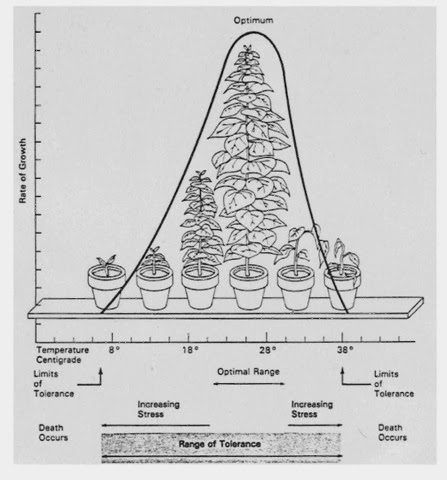
P. 52 (Tolerance Ranges)

Example of a dry lab:
  1. What is the optimal temperature to grow this plant?
  2. At what temperatures would the plant die?
  3. Describe how the plant would grow at 10° C.
  4. Based on this data, what areas in the world would you expect to find this plant?


Monday, 13 January 2014

Jan. 13 – Lab Exam Review

Hi Everyone,

Now that the term is drawing to a close, it's time to review and prepare for your exams.

  • Lab Exam: Friday, Jan. 17
Here's the first page of the exam with instructions and rules: Lab Exam Page 1

Here are some review notes we discussed in class...

Format
  • One full period (75 minutes).
  • Complete 5 activities.
  • Work individually.
  • Bring only a pencil, eraser and calculator.
  • Worth 10% of your final mark.

REVIEW


Previous Labs
 - Density
 - Physical and Chemical Change
 - Charging Objects
 - Building Circuits
 - Ohm's Law

Dry Labs (Space and Ecology)
 - You will be provided with data.
 - You will do an analysis by answering questions.

Review Density


Definition:  mass divided by volume.

D = m / V            m = D x V            V = m / D

How did you measure density in your lab?

We measured D for water.
   - graduated cylinder measures V in  mL.
   - scale measures m in g.

Example:
A block of wood has volume 36 cm^3 an weighs 22 g.  What is the density?  Will it float?

Given: V = 36 cm^3, m = 22 g
Required: D = ?
Analyze: D = m / V
Solve: D = 22 g / 36 cm^3
              = 0.61 g/cm^3
Statement: The Density is 0.61 g/cm^3, it will float.

**The Density of water is 1 g/cm^3.

Example: 
Mercury (the element, not the planet) has a density of 7.6 g/cm^3.  If you want to measure out 1 kg of it, how big of a container do you need?

Need volume, V.    1 cm^3 = 1 mL
1 kg = 1000 g

V = m / D

V = (1000 g) / (7.6 g/cm^3)
   = 131.578 mL
   = 130 mL

Review Significant Digits
- Any non-zero is significant
  2913 four sig. digs.
  2900 two sig. digs.

- Zeroes in-between digs are significant.
  2014 four sig. digs.

With a decimal…
- Zeroes on the left are NOT significant
  0.0025 two sig. digs.

- Zeroes on the right ARE significant
  0.250 three sig. digs.
  100.0 four sig digs.

HOMEWORK

Read and Review the following.  This will help you prepare for the dry labs.
  • P. 43-44 (Food Webs), 
  • P. 45 (Ecological Pyramid),
  • P. 111 #13 (Changing food web)


Friday, 10 January 2014

Jan. 10 – Quest Period


Congratulations on completing the Space Unit!

  • Your 70% term mark is now complete.
  • Your Lab Exam worth 10% will be on Friday, Jan. 17.
  • Your Final Exam worth 20% will be on Monday, Jan. 27 for Period 1 and Thursday, Jan. 30 for Period 4.
No homework for this weekend!  But if you want to stay ahead, look for every lab activity we did so far this term and collect them together.  You will need them to prepare for the Lab Exam.

Have a great weekend!

Thursday, 9 January 2014

Jan. 9 – Space Review

Today we played Jeopardy!


Here's the file so you can see all the questions and answers: Space Review Jeopardy.

Handout: Quest Review Topics

Best of luck in your studies!

Wednesday, 8 January 2014

Jan. 8 – Space Exploration Challenges and Spinoffs

Learning Goals: Understand the challenges and positive outcomes of space exploration.

Success Criteria: You can describe some of the challenges, including health issues faced by astronauts.  You can also describe various technology spinoffs from space exploration that we use every day.

Handouts: Space Travel Challenges and Spinoffs

Watch this impressive video of the space shuttle taking off:


Here are the stages of a space shuttle launch,


 The Shuttle Program has been retired, but there are plans to replace it with a new type of rockets called Ares:


Most rockets used chemical fuel, but new types of ionic thrusters are being developed.  It should remind you of the Chemistry and Electricity units.  Have a look at how this thruster works from the video on this site:


The first space tourist was named Dennis Tito, who went up with Russian rockets to spend time on the ISS.  He was the first non-astronaut to take the trip and paid $30 million for the honour!


Virgin Galactic plans to offer tourist flights to space for a much cheaper cost of $250 000.
Once in space, the human body faces many challenges.  Blood begins to pool in the upper body and legs become thinner.  Refer to the handout for a more health complications.


Watch this video and notice how weak the astronauts look when they land.  You can see that Chris Hadfield is carried over to his chair because he can't walk right away after returning!


Spinoffs are technologies designed for space travel that become useful on Earth in our every day lives.  Without research in space, many modern advances would not be possible.  This image shows some examples.  For more examples, visit this interactive site designed by NASA:


Homework: 
  • P. 373 # 2, 5, 7, 10
  • P. 382 # 3, 4, 6, 7, 10
  • P. 391 # 1, 4, 8, 9

Tuesday, 7 January 2014

Jan. 7 – The Big Bang and Space Exploration

Today was an inclement weather day.  For those of you who did not make it to class, please read sections 9.7 and 10.1

Learning Goals:

  • Understand the theory and evidence behind the Big Bang.
  • Understand Canadian contributions to space exploration.


Success Criteria:

  • You can explain the theory of the Big Bang.
  • You can describe some Canadian contributions to space exploration.
Handouts
I've included the completed version of the handouts for people who were not in class.

After Edwin Hubble discovered there were galaxies beyond the Milky Way, he found evidence that they were all moving away from us from looking at their redshift.  


If we were to extrapolate into the past, it would mean that at some point, all the galaxies were at one place, condensed together into a dense, hot state.  This state is what we refer to as the Big Bang.  This is the earliest point in history that we can know anything about and we refer to it as the beginning of our universe.


Next we looked at some tools in space exploration and how Canada has made some contributions.

Here's a video of Chris Hadfield controlling the Canadarm2.


Candarm2 and DEXTRE have been honoured on the new 5 dollar bills.


Refer to the handouts for more details.

Homework: Read the sections in your text book, section 9.7 and section 10.1.

Remember the Quest is on Friday.

Monday, 6 January 2014

Jan. 6 – Solar System and Beyond

Welcome back to class!  I hope you all had a relaxing and re-energizing break.

Here are some important dates to keep in mind for the end of the term:

  • Jan. 10, Friday: Quest
  • Jan. 13 - 17: Lab exam, space assignment
  • Jan. 20 - 23: Reviews
  • Jan. 24 - 30: Exams
  • Jan. 31: Exam Review Day


REVIEW
See if you can answer these questions to see how much you remember:

1. Which one is the biggest?
A) Mercury
B) Venus
C) Earth
D) Mars

2. Which one is the smallest?
A) Jupiter
B) Saturn
C) Uranus
D) Neptune

3. Which one is the surface of the sun?
A) Convective zone
B) Photosphere
C) Chromosphere
D) Corona

4. What Phase of the moon is this?

A) Waning Crescent
B) Waxing Crescent
C) Waning Gibbous
D) Waxing Gibbous

5. Which star is the hottest?


6. Sirius is 8.15 e 13 km away.  How many light years away is it?
  1 light year = 9.46 e 12 km

ANSWERS
  1. C
  2. D
  3. B
  4. C
  5. A
  6. 8.61 light years
Here's the new material for today:

Learning Goals: Understand how the solar system formed and its place in the galaxy.

Success Criteria: You can describe the formation of the solar system and the structure of galaxies.

Solar System Formation

Watch this video and see if you can summarize the Nebula Theory that forms our solar system.


Nebula Theory
 - Nebula contains dust and particles
 - particles collected into a disc due to gravity
 - sun formed in the middle, all planets orbit in the same direction
 - rocky planets formed closer to the sun, gas planets on the outside.

Outside the solar system

 - Stars clusters are held together by gravity
 - open cluster: up to 1000 stars
 - Gobular clusters: up to millions of stars outside of galaxies

An open cluster of stars.

 - Edwin Hubble discovered that other galaxies existed.


        Elliptical: oval shaped, older

        Spiral: old stars in middle, many different kinds 

        Lenticular: disc with bulge in middle

        Irregular: no shape

Irregular shapes can form from colliding galaxies.


Milky Way: Our galaxy is a 2 armed spiral
  - over 200 billion stars
  - over 100 000 ly across
  - John S. Plaskett discovered that we are 30 000 ly from the middle.

An image showing where our Earth sits inside of our Universe.

Earth < Solar system < Milky Way < Local Group < Virgo Supercluster < Universe

Homework
  • P. 343 # 1-5, 7-10
  • P. 351 # 1, 2, 6, 7, 9
  • P. 369 # 1-3, 6, 7, 8, 11

Thursday, 19 December 2013

Dec. 19 – Stars

Stars


Learning Goals: Understand that stars come in different types.

Success Criteria: You can describe the life cycle of different stars.

Stars come in many different sizes, colours and temperatures.  Here are a few ways we can tell the difference between stars.

Luminosity
  • Total amount of energy produced by a star per second.
  • The sun has luminosity of 1.


Apparent Magnitude 
  • A star's brightness as seen from Earth.
    • The sun = -27 apparent magnitude
    • Full Moon = -13
    • Brightest Stars = 1
    • dimmest stars = 6


Absolute Magnitude
  • The magnitude we would see if we were 33 ly away.


Colour
  • A star's colour is related to temperature.
    • Blue - hotter
    • Yellow - medium
    • Red - cooler


Spectrum 
  • The rainbow of light emitted by a star.  
  • Missing lines in the spectrum tell you what the star is made of.

Each element emits a different spectrum.  The missing colours (dark bands) line up with hydrogen, so the star definitely has hydrogen in it.

Mass
  • The sun is 2 e 30 kg = 1 solar mass
  • Most stars range from 0.1 to 120 solar masses.


The life cycle of stars

Nebula - a massive cloud of gas and dust.


Protostar - dust from a nebula collapses under gravity.

After millions of years, a protostar collapses further until fusion happens, 15 million °C.

The type of star depends on mass.

Hertzsprung-Russell Diagram
 - hot, luminous stars are more massive.
 - most stars fall on "Main Sequence"


Small stars:
After 10 billion years, burn off hydrogen and expand to become red giants.


hydrogen --> helium --> other elements (lithium, carbon, etc)

Eventually stops fusion and a white dwarf is left over.  Cool down and fade out.

Bigger Stars:
Shorter lives, burn faster.
Can fuse heavier elements
carbon --> iron

After fusion, gases collapse, then bounce back and explode into a super nova.

The Crab Nebula is the left over from a super nova.
Heavier elements are fused.

After super nova you can have one of two things left over...

Neutron Star - made of pure neutrons.
Super dense, gravity 300 000 times that of earth.

This is what Neutron Star would look like over Vancouver.  Much smaller than the Earth, but hundreds of thousands of times more massive.
Black hole - even more dense than neutron stars, gravity so strong that light cannot escape.

An artists drawing of a star being torn apart by a black hole.


The life cycle of different stars.

Homework
  • P. 351 # 1, 2, 6, 7, 9
  • P. 369 # 1-3, 6, 7, 8, 11


Wednesday, 18 December 2013

Dec. 18 – Satellites and Distances

Unfortunately it was too cloudy last night for you to make use of your star finders.  Hold onto them and try them out over the holidays.  One day we might get a hight without snow!

Learning Goals: 
  • Understand the basic functions of satellites.
  • Understand how astronomical distances are described.
Success Criteria:
  • You can describe how satellites orbit and describe some major uses of artificial satellites.
  • You can convert between kilometers, astronomical units and light years.
The Earth has one natural satellite... the Moon.


But there are many artificial satellites that are made by humans.

These satellites provide us with many useful functions:
Uses of artificial satellites.
  • Spying
  • Communication (phones, radio, tv)
  • GPS (Global Positioning System)
  • Weather
  • Maps
  • Scientific Research
  • International Space Station (ISS)


Chris Hadfield is a Canadian astronaut who was the commander of the ISS earlier this year. 
While Commander Hadfield was up on the International Space Station he took many photos and made many videos which he posted online.  Here's one of them:


How does the ISS and other satellites stay in orbit?
- They move at a specific speed to stay in orbit.
- They are constantly falling, but never reach the Earth.


Types of orbit.
 - The higher the altitude the longer the orbit.  The ISS is 350 km up and orbits in 90 mins.
    -  Low Earth Orbit (under 2000 km)
        eg. Polar Orbit

    -  Medium Orbit (under 35 000 km)
        eg. GPS satellite in geostationary orbit (24 hr period)

     - High Elliptical Orbit (over 40 000 km)

CHAPTER 9: Beyond our Solar System

The Moon is about 384 400 km away from the Earth.

Earth is about 150 million km away from the Sun.
  1.5 e 8 km = 1 AU (astronomical unit)

  • Mars is 1.5 AU from the Sun.
  • Jupiter is 5.2 AU from the Sun.
  • Pluto is about 30 AU from the Sun.
The nearest star to the sun is Proxima Centauri.  It is 4.0e13 km away from the sun, about 270 000 AU.  Clearly we need a unit that is even larger than AU.

Light Years
Light travels at a speed of 
300 000 km/s.  How far does light travel in one year?

300 000 km/s x (60 s/min) x (60 min/hr) x (24 hr/day) x (365 days/year) x (1 year)
    =  9.46 e 12 km

This is one light year.

How many light years away is Proxima Centauri?
Here's how you do the calculations:


For some comparison, Polaris is 400 ly away.
The closest galaxy to the Milky Way, Andromeda, is 2 600 000 ly away!

Here are some other distances,


How do we measure these distances?
Parallax - apparent change of position due to location.


We can use the apparent change in position to triangulate the distance.

Homework:

  • P. 343 # 1-5, 7-10